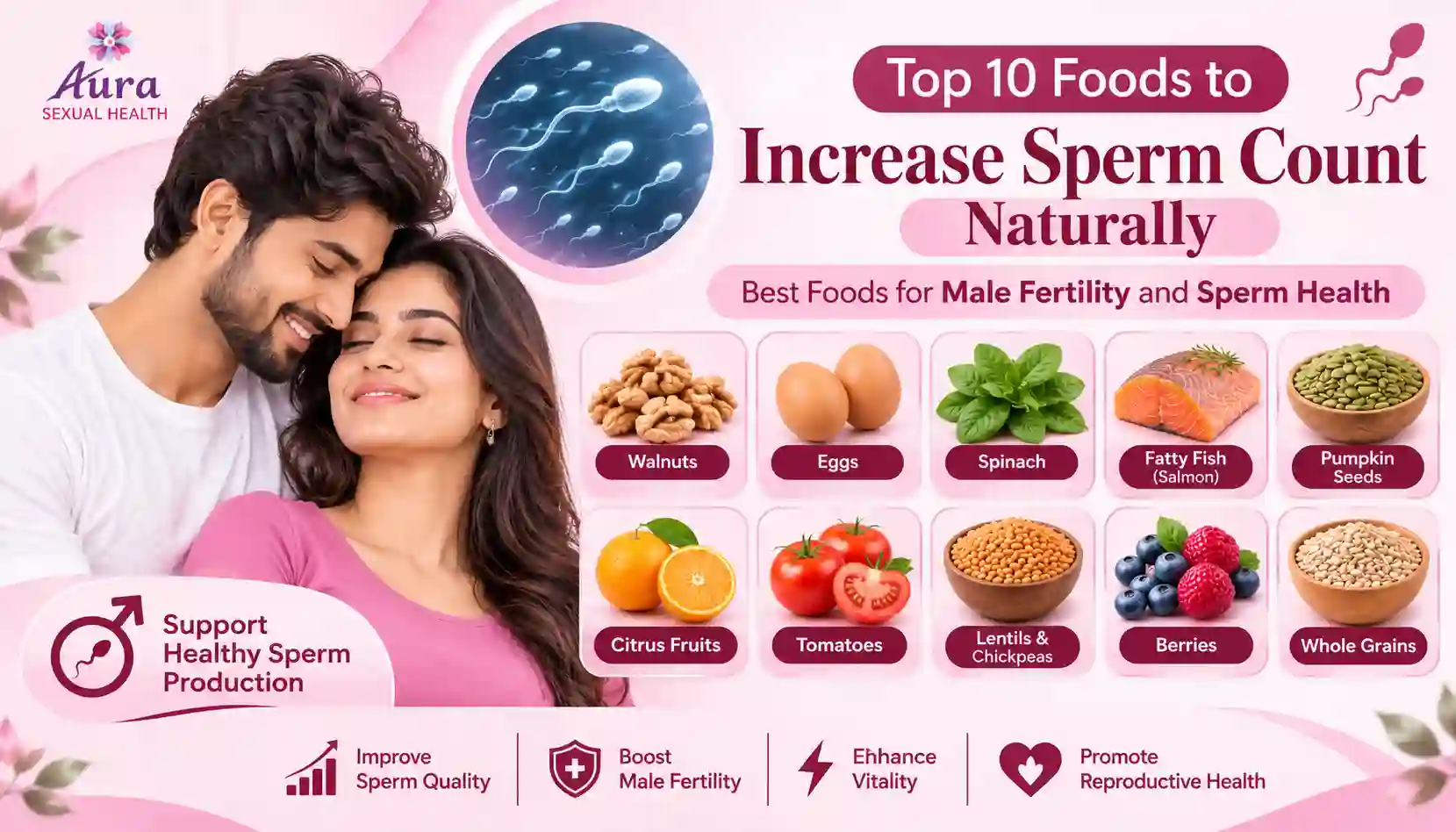
Top 10 Foods to Increase Sperm Count Naturally: Best Foods for Male Fertility and Sperm Health
Male fertility plays an important role in reproductive health and family planning. Sperm count, sperm motility and sperm morphology are important parameters used to evaluate male fertility. Diet and lifestyle also contribute to overall reproductive health, making proper nutrition an important part of a healthy lifestyle.
Many men search for natural ways to increase sperm count, improve sperm quality and support healthy sperm production. Nutrient-rich foods containing zinc, selenium, folate, vitamin C, vitamin E and omega-3 fatty acids can help support normal reproductive functions.
If you are looking for the best foods to increase sperm count naturally, this guide explains the top 10 foods for male fertility, their nutritional benefits, important vitamins and minerals, and healthy dietary habits that support sperm health.
10 Foods to Increase Sperm Count Naturally
A balanced diet containing essential nutrients can support overall male reproductive health. Here are 10 nutritious foods that you can include in your daily diet to support sperm health and fertility.
1. Walnuts
Walnuts are among the best nuts for male fertility because they contain omega-3 fatty acids, antioxidants and other essential nutrients. Healthy fats are important for normal cell function, including reproductive health.
Benefits:
- Provide plant-based omega-3 fatty acids.
- Contain antioxidants that help protect cells from oxidative stress.
- Supply vitamin E and other nutrients.
- Support a balanced diet for male reproductive health.
2. Eggs
Eggs are an excellent source of high-quality protein, vitamin B12, selenium and other essential nutrients. These nutrients contribute to normal cell function and overall health.
Benefits:
- Provide high-quality protein.
- Contain selenium, which supports normal reproductive functions.
- Supply vitamin B12.
- Help meet daily nutritional requirements.
3. Spinach
Spinach is a nutrient-rich green leafy vegetable containing folate, iron, vitamin C and antioxidants. Folate plays an important role in DNA synthesis and normal cell division.
Benefits:
- Provides folate for normal cell function.
- Contains vitamin C and antioxidants.
- Supplies iron and other essential nutrients.
- Supports a healthy and balanced diet.
4. Fatty Fish
Fatty fish such as salmon, sardines and mackerel are rich in omega-3 fatty acids and high-quality protein. Omega-3 fatty acids are important components of cell membranes and have been studied for their relationship with sperm quality.
Benefits:
- Provide omega-3 fatty acids.
- Supply high-quality protein.
- Contain vitamin D and selenium.
- Support overall reproductive and cardiovascular health.
5. Pumpkin Seeds
Pumpkin seeds are one of the best foods for zinc intake. Zinc is an essential mineral involved in normal reproductive function, cell growth and hormone metabolism.
Benefits:
- Provide zinc, which is important for male reproductive health.
- Contain magnesium and iron.
- Supply healthy fats and plant-based protein.
- Make a nutritious addition to daily meals.
6. Citrus Fruits
Oranges, lemons and sweet limes are rich in vitamin C. Vitamin C acts as an antioxidant and helps protect cells from oxidative stress.
Benefits:
- Provide vitamin C and antioxidants.
- Support normal immune function.
- Help protect cells from oxidative damage.
- Add important nutrients to a balanced fertility diet.
7. Tomatoes
Tomatoes contain lycopene, a natural antioxidant that has been studied for its potential relationship with sperm health.
Benefits:
- Provide lycopene and vitamin C.
- Contain antioxidants.
- Support overall cellular health.
- Can easily be included in everyday Indian meals.
8. Lentils and Chickpeas
Lentils and chickpeas are excellent vegetarian foods for male fertility. They provide plant-based protein, folate, iron and zinc, which contribute to normal body functions.
Benefits:
- Provide plant-based protein.
- Contain folate and iron.
- Supply zinc and dietary fibre.
- Support balanced nutrition for vegetarian men.
9. Berries
Berries such as strawberries, blueberries and raspberries contain vitamin C and various antioxidants. Antioxidants help protect cells from oxidative stress, which is one factor studied in relation to sperm health.
Benefits:
- Provide vitamin C and antioxidants.
- Support normal cellular function.
- Supply dietary fibre.
- Add variety to a healthy diet.
10. Whole Grains
Whole grains such as oats, brown rice, whole wheat and millets provide fibre, B vitamins and essential minerals. They are useful components of a balanced diet that supports overall metabolic health.
Benefits:
- Provide B vitamins and minerals.
- Contain dietary fibre.
- Support healthy digestion.
- Help maintain balanced everyday nutrition.
Diet for Male Fertility
A healthy male fertility diet should contain a variety of nutrient-rich foods, including fruits, vegetables, whole grains, nuts, seeds, fish and protein sources. Rather than depending on one particular food, focus on eating a balanced diet every day.
Here is a simple Indian diet plan that can support overall male reproductive health.
Breakfast:
- Boiled eggs or vegetable omelette.
- Whole wheat bread or oats.
- A handful of walnuts and almonds.
- One serving of fresh fruit.
Mid-Morning Snack:
- Orange, guava or papaya.
- A glass of water.
Lunch:
- Brown rice or chapati.
- Dal or chickpeas.
- Spinach or other green leafy vegetables.
- Fish or paneer.
- Fresh vegetable salad.
Evening Snacks:
- Pumpkin seeds and walnuts.
- Roasted chickpeas.
- Unsweetened buttermilk.
Dinner:
- Chapati or millet-based meals.
- Vegetable curry.
- Fish, chicken, tofu or dal.
- Fresh vegetables.
A balanced diet provides essential nutrients that support normal reproductive functions. Individual dietary requirements may vary based on age, health conditions and nutritional status.
Vitamins for Sperm Health
Certain vitamins and minerals are important for normal sperm production, reproductive function and overall male health. Here are some important nutrients to include in your diet.
1. Vitamin C
Vitamin C is an antioxidant that helps protect cells against oxidative stress. Sources include oranges, amla, guava, lemons and strawberries.
2. Vitamin E
Vitamin E is an antioxidant that helps protect cell membranes. Sources include almonds, sunflower seeds, spinach and vegetable oils.
3. Vitamin B9 (Folate)
Folate is important for DNA synthesis and normal cell division. Sources include spinach, lentils, chickpeas and green vegetables.
4. Vitamin B12
Vitamin B12 supports red blood cell formation and normal nervous system function. Sources include eggs, dairy products, fish and meat.
5. Vitamin D
Vitamin D is involved in several important body functions, including reproductive health. Sources include fatty fish, egg yolks and fortified foods.
6. Zinc
Zinc is an essential mineral involved in normal reproductive function and sperm production. Sources include pumpkin seeds, nuts, legumes, seafood and meat.
7. Selenium
Selenium is an essential mineral that contributes to normal reproductive function and antioxidant protection. Sources include eggs, fish, seafood and nuts.
A varied diet can help provide these nutrients. However, taking high-dose vitamin or antioxidant supplements without medical advice is not recommended.
Nuts for Sperm Count and Male Fertility
Nuts provide healthy fats, protein, minerals and antioxidants. They can be included in a balanced diet to support overall reproductive health. Some nutritious nuts include:
- Walnuts: Provide omega-3 fatty acids and antioxidants.
- Almonds: Contain vitamin E, magnesium and healthy fats.
- Brazil Nuts: Provide selenium. Avoid excessive consumption because too much selenium can be harmful.
- Cashews: Supply zinc and other minerals.
- Pistachios: Provide protein, antioxidants and healthy fats.
A moderate serving of mixed nuts can be a convenient addition to your daily diet.
Seeds for Sperm Health
Seeds are nutrient-dense foods that provide zinc, selenium, healthy fats and antioxidants. Here are some beneficial seeds to include in your diet:
- Pumpkin Seeds: Provide zinc and magnesium.
- Sunflower Seeds: Contain vitamin E and healthy fats.
- Flaxseeds: Supply plant-based omega-3 fatty acids.
- Chia Seeds: Provide omega-3 fatty acids and fibre.
- Sesame Seeds: Contain zinc, iron and other minerals.
You can add seeds to smoothies, salads, curd, oats and breakfast dishes to improve your daily nutritional intake.
Foods to Avoid for Better Sperm Health
Along with eating healthy foods, limiting certain dietary and lifestyle habits may support male reproductive health. Consider reducing:
- Processed Foods: Frequent consumption of highly processed foods may contribute to poor overall dietary quality.
- Sugary Drinks: Limit soft drinks and beverages with excessive added sugar.
- Processed Meats: Avoid excessive consumption of sausages, bacon and other processed meat products.
- Excessive Alcohol: High alcohol consumption is associated with poorer reproductive health and may affect sperm quality.
- Excessive Fast Food: Frequently eating foods high in unhealthy fats and calories may contribute to weight gain and metabolic problems.
- Smoking: Smoking is associated with poorer sperm quality and can negatively affect reproductive health.
Maintaining a healthy weight, exercising regularly, avoiding smoking and limiting alcohol are important parts of a healthy lifestyle.
Lifestyle Tips to Improve Sperm Quality Naturally
Diet is only one part of male reproductive health. Healthy lifestyle habits can also play an important role.
- Exercise Regularly: Moderate physical activity supports overall health and healthy weight management.
- Maintain a Healthy Weight: Obesity is associated with poorer sperm quality in some men.
- Get Adequate Sleep: Maintain a consistent sleep routine.
- Avoid Smoking: Smoking can negatively affect sperm quality.
- Limit Alcohol: Avoid excessive alcohol consumption.
- Avoid Anabolic Steroids: Anabolic steroids and external testosterone can suppress sperm production.
- Manage Stress: Include relaxation and stress-management activities in your routine.
- Avoid Excessive Heat Exposure: Repeated exposure to high temperatures around the testicles may affect sperm production.
Healthy lifestyle changes can support reproductive health, but they cannot replace medical evaluation when sperm count is low.
When Should You Consult a Male Fertility Specialist?
If you and your partner have been trying to conceive for 12 months without success, a fertility evaluation is recommended. Couples should seek evaluation earlier when the female partner is 35 or older, or when either partner has known reproductive health concerns.
Common signs and situations that may require medical evaluation include:
- Low sperm count.
- Poor sperm motility.
- Abnormal sperm morphology.
- Difficulty conceiving.
- Testicular pain or swelling.
- History of testicular injury or surgery.
- Previous hormonal or reproductive health problems.
A semen analysis is an important initial investigation used to evaluate sperm concentration, motility and morphology. Depending on the results, a specialist may recommend additional tests such as hormone evaluation, ultrasound or other investigations.
Identifying the underlying cause is important for selecting appropriate male infertility treatment.
Frequently Asked Questions

Need confidential guidance?
Our team is here to help you understand your options and take the next step with confidence.
Book a Confidential CallFoods such as walnuts, eggs, spinach, fatty fish, pumpkin seeds, citrus fruits, tomatoes, lentils, berries and whole grains provide nutrients that support overall reproductive health. However, no single food is proven to directly increase sperm count or treat male infertility.
Conclusion
Maintaining good sperm health starts with balanced nutrition and healthy lifestyle habits. Including walnuts, eggs, spinach, fatty fish, pumpkin seeds, citrus fruits, tomatoes, lentils, berries and whole grains can help provide essential nutrients that support normal male reproductive health.
However, low sperm count and male infertility can have several underlying causes, including hormonal problems, infections, genetic conditions and reproductive system disorders. Dietary changes alone may not be sufficient to address these conditions.
Take the First Step Towards Better Reproductive Health!
At Aura Sexual Health Clinic, professional evaluation can help identify possible causes of male fertility concerns. Consult a qualified male fertility specialist to understand your sperm health, undergo appropriate investigations and explore suitable treatment options.
Your reproductive health deserves the right care, accurate diagnosis and expert guidance.